The Civil War

The Civil War

1990
The Civil War
Watch on
The Civil War
Watch on

The Civil War

9 | TV-14 | en | Drama

A documentary on the American Civil War narrated by Ken Burns, covering the secession of the Confederacy to the assassination of Abraham Lincoln.

View More
Watch Now
Rent / Buy
Buy from £6.99

Seasons & Episodes

1
0
EP2  A Very Bloody Affair: 1862
Sep. 24,1990
SEE MORE
SEE MORE
9 | TV-14 | en | Drama , Documentary , War & Politics | More Info
Released: 1990-09-23 | Released Producted By: Florentine Films , American Documentary Films Inc. Country: United States of America Budget: 0 Revenue: 0 Official Website: http://www.pbs.org/civilwar/
info

A documentary on the American Civil War narrated by Ken Burns, covering the secession of the Confederacy to the assassination of Abraham Lincoln.

Genre

Drama , Documentary , War & Politics

Watch Online

The Civil War (1990) is now streaming with subscription on PBS America

Cast

David McCullough , Sam Waterston , Julie Harris , Jason Robards , Morgan Freeman , Paul Roebling

Director

Ken Burns

Producted By

Florentine Films , American Documentary Films Inc.

The Civil War Videos and Images

View All
  • Top Credited Cast
  • |
  • Crew
Ken Burns
Ken Burns

Director of Photography

Paul Barnes
Paul Barnes

Editor

Ken Burns
Ken Burns

Executive Producer

Ric Burns
Ric Burns

Producer

Julie A. Dunfey
Julie A. Dunfey

Producer

Mike Hill
Mike Hill

Producer

Stephen Ives
Stephen Ives

Producer

Jay Ungar
Jay Ungar

Original Music Composer

The Civil War Audience Reviews

NekoHomey Purely Joyful Movie!
Actuakers One of my all time favorites.
filippaberry84 I think this is a new genre that they're all sort of working their way through it and haven't got all the kinks worked out yet but it's a genre that works for me.
Fleur Actress is magnificent and exudes a hypnotic screen presence in this affecting drama.
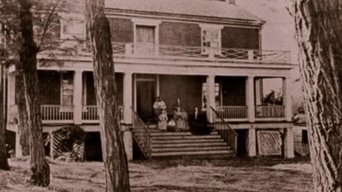
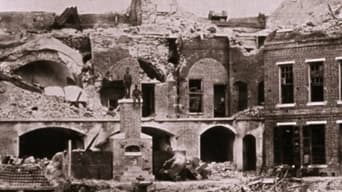
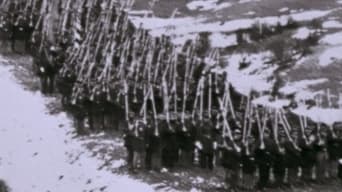
classicalsteve According to Shelby Foote, southern historian and poet, prior to the American Civil (1861-1865), people used the 3rd-person plural to refer to the nation, i.e., "The United States are a great nation." After the war, the 3rd-person singular came into use for the nation: "The United States is a great nation." Of the many things which The Civil War accomplished, at the price of 2% of the young population, it changed the country from an "are" to an "is".Ken Burns and Florentine Films with the raw but resonant narration of David McCullough has created quite possibly the greatest documentary on an American subject, chronicling the circumstances surrounding the transition from a nation with fairly autonomous states to a nation whose ideals are founded upon non negotiable principles of freedom. While those principles were not always upheld for about 100 years after the war and even beyond, at least the ideas of these principles are a driving force. The Civil War, as Foote says, was a "crosswords of our being". "The Civil War" by Ken Burns is certainly a chronological portrayal of that crossroads largely through the scripted narration spoken by McCullough and the many period photographs which brings us back into America of the Mid-19th Century. In addition, Florentine Films accomplishes two important goals beyond "the facts" which boosts the experience into the stratosphere of American television. Firstly, much of the story is told through quotes by primary sources. Florentine uses the voices of many prominent actors and professional voices, such as Sam Waterston (voice of Abraham Lincoln), Morgan Freeman (voice of Frederick Douglass), George Black (Robert E. Lee), Jason Robards (Ulysses Grant), Julie Harris (Mary Chestnut), and Garrison Keillor (Walt Whitman and others). The journals of two soldiers, Sam Watkins (Confederate) and Elijah Hunt Rhoades (Union), are quoted from extensively to tell the story of the war from the ground level, making for a far more fascinating account than most textbooks.Secondly, "The Civil War" has a rhetorical perspective. Barbara Fields offers the grander picture of the meaning of the war from a political-historian's evaluation. While Shelby Foote probably has the most screen time, the commentary by Fields is truly the crux of the film's hypothesis. Fields argues that the Civil War was a conflict in which guns, armies and artillery entered into the discussion of American slavery. Despite opinionated revisionists of the late 20th and early 21st centuries who want to paint the Civil War as simply a conflict of state's rights, Fields explains that the war was a conflict to resolve the issue of slavery which had been at odds with the ideals of the Declaration of Independence. Jefferson had eloquently written that "all men are created equal, that they are endowed by their Creator with certain unalienable Rights, that among these are Life, Liberty and the pursuit of Happiness." In a quote by Lincoln, he adds to the end of the statement "except Negros." Fields' assessment in my humble opinion is the best interpretation of the true core of the Civil War. Other problems of states' rights could have been resolved, but the institution of slavery was irreconcilable with the founding principles of democratic governance. The United States had either to allow slavery to be a universally accepted institution, thereby destroying the very nature of the country's ideals, or abolish it altogether. A civil war occurred to decide in which direction the country would turn. The series begins with the Abolitionist Movement of the 1830's whose galvanization began to frighten the American South. Since slavery became widespread, in large part due to the cotton gin, the South believed they needed to depend upon slavery to maintain their economic livelihood mainly through cotton production. The slavery issue is not idealized, and the first episode demonstrates the brutal and violent reality of slavery as a legal institution in the South, somewhat similar to its portrayal in the television miniseries "Roots" in the 1970's. Revisionists often desire to "minimize" the impact of slavery which led to hatred and distrust between the north and south and was clearly the cause of Southern Secession. Yes, some slaves and masters did sometimes have good relationships, but that doesn't justify the heinousness of slavery as a legal institution. Fearing their livelihoods will be torn by the anti-slavery North, seven southern states declared separation from the Union in 1861. The United States government then determines to quash the southern rebellion. Balanced with Fields' interpretations are the stories of Shelby Foote, a fantastic storyteller who describes the personalities of the many figures in very human terms, particularly those of the Southern Confederacy. While Foote lacks the grander assessments of an historian like Fields, he makes up for it with his stories, many of which are quite humorous. "Why are you fighting this war?" a Union soldier asks a Confederate. "Because you're down here." He also paints a balanced view of the people of the Confederacy who are not the pure evil villains they are often portrayed as in text books. Simultaneously, he also assesses the weaknesses of some of the most revered figures, such as General Lee's order for Pickett's Charge on the last day of the Battle of Gettyburgh which was beyond a fiasco. "The Civil War" is a triumph of documentary filmmaking. Every chosen episode is fascinating, such as when General Benjamin Butler's portrait appeared on the bottoms of chamber pots as southern retaliation when he occupied New Orleans. Others include quotes by Frederick Douglass whose rhetoric against slavery was only equaled by Martin Luther King, Jr., for civil rights 100 years later. "I appear before you this evening as a thief and a robber. I stole this head, these limbs, this body from my master and ran off with them." The "rebel yell" is described but probably not completely knowable. As someone once said, war brings out both the worst and the best in people.
drjgardner It's been 25 years since the first showing of Ken Burns' "The Civil War" I recall at the time thinking that it was truly revolutionary and wonderful and I expected it would set the tone for the next decade in terms of documentaries. Viewed now 25 years later, the series is still mind boggling. The detail is amazing. Pictures, songs, and letters blend into an incredible program that despite the length keeps you transfixed on the screen. When originally broadcast you had to wait for each episode. Now, thanks to modern technology, you can record and view them all at once, or in my case, over 2 days. In many senses this is even more powerful than viewed one episode at a time.Though my admiration for the series has only increased upon viewing it again, I am disappointed that there has been nothing to match it in the years since. Ken Burns has gone on to produce several series, most notably "The Roosevelts" (2014) and "Baseball" (1994), but in my mind there has been nothing equal to "The Civil War". Moreover, other notable documentary makers (e.g., Michael Moore, Werner Herzog, Errol Morris) have not done anything along these same lines.If you haven't seen "The Civil War", you should see it. If you've seen it, see it again. It is not merely a documentary, but it is a lesson in how we became whom we are today.
Robert Reynolds There's very little which needs to be said about this work, which truly needs no introduction from me. There will be spoilers ahead:Today, April 9, 2015, is the 150th anniversary of Lee's surrender to Grant at Appomattox Court House, which effectively signaled the end of the US Civil War. It seems, therefore, an appropriate date for me to post a comment on this remarkable piece of work.If Ken Burns has a single masterpiece, this is that masterpiece. Composed primarily of still photographs, with voice-over work by the narrator, David McCullough (a noted historian) or various voices reading from the writings of figures both notable in the time and just ordinary individuals witnessing/living through history, supplemented by interviews with four historians (Shelby Foote, Ed Bearss, Barbara Fields and Stephen B. Oates) and a former Congressman (James Symington) it would have been remarkably easy for this to be static, become boring and sink of its own weight. That it doesn't do so is testament to the abilities of Ken Burns and those working with him.Over more than 11 hours, the documentary covers the events which led to the South's secession and the start of the war itself, the conduct of that war and its aftermath and effect on both those individuals involved and the nation (and, to some degree, the rest of the world).The effect, certainly to me, is spellbinding. For physical reasons, I have trouble sitting for long periods of time, yet I've watched this under every possible set of circumstances (including a one day marathon once of the whole thing) and the time flies by.A fair and balanced portrayal of all sides of the question is provided here, with even John Brown and Nathan Bedford Forrest being presented evenhandedly and fairly, which is quite an accomplishment, given the polarizing nature of the two men.I've been fascinated by the Civil War for decades and have read much of the contemporaneous material from which the narration was drawn, including most of the material from Lincoln's speeches and writings, Mary Chesnut's diaries and so on. This represents a remarkable undertaking and I recommend it unreservedly and most wholeheartedly.
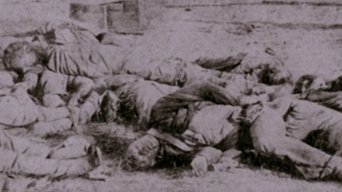
suaheli What a marvellous documentary, which I had the pleasure to watch in German TV afternoon after afternoon due to my vacation leave. Nowadays here at least historical events are presented with historical photos/movie clips which are added to by awfully staged scenes by mediocre actors, mostly even dubbed because these scenes are shot in Rumania or the likes (no offence).This production here is simply breathtaking. No staged scenes just heartbreaking photographs of all these young people, staring confidently, sometimes a little fright is visible, into a camera. Add to this the letters being read - in German in my case, by marvellous contributors - it makes you feel like being there and rooting for Elisha Rhodes and Mary Chesnut and all their contemporaries. I as a German never learned f all about the Civil war but was fortunate to have a Dad who was fascinated by all things American, the liberators for a young soldier who was drafted at 18 to do the Russian campaign. Should there ever be a documentary about these boys, I'd proudly present a little tin cigarette case which dad received from a Russian POW, made from a tin plate, the upper side shows a tank and war planes, the other side shows a little peaceful house with birds. All made by use of a fork and as a gift for bread being smuggled in by dad, Breslau it reads. This drifting towards an other war just goes to tell how many heartbreaking stories have to be told. And the Ken Burns documentary is epic and wonderful by showing the faces of war, the voices of war. Could you imagine photographs of dead soldiers, some unimaginably mutilated in our days? Unimaginable. We today have clean wars, you get the numbers of deads but are spared the pictures. This documentary made me shed so many tears, war is hell (Sherman) and so many stories are still untold. War is hell indeed. And should be shown as such. Where is the documentary about letters, unsufferable pictures and such about nowadays wars? Unbelievable, but the two last centuries dealt with war much more honest than today when we are sold for in these days of internet and all around "information".Watch it.