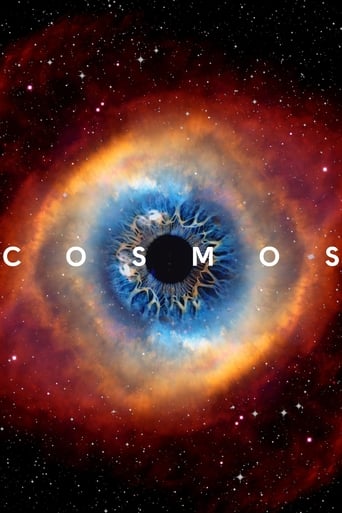
Cosmos: A Personal Voyage

Cosmos: A Personal Voyage

1980
Cosmos: A Personal Voyage

Cosmos: A Personal Voyage

9.3 | en | Documentary

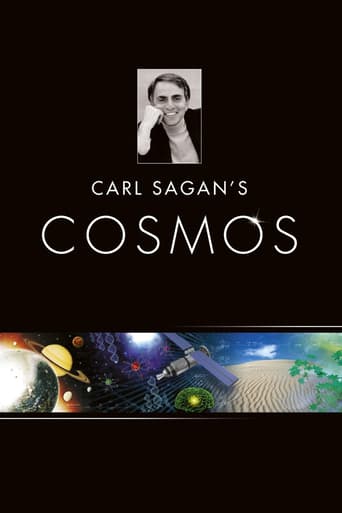
Carl Sagan covers a wide range of scientific subjects, including the origin of life and a perspective of our place in the universe.

View More

Seasons & Episodes

1
0
EP1  The Shores of the Cosmic Ocean
Sep. 28,1980
The Shores of the Cosmic Ocean

At the beginning of this cosmic journey across space and time, Dr. Carl Sagan takes us to the edge of the universe aboard a spaceship of the imagination. Through beautiful special effects, we witness quasars, exploding galaxies, star clusters, supernovas and pulsars. Returning to our solar system, we enter a re-creation of the Alexandrian Library, the seat of learning on Earth 2,000 years ago.

EP2  One Voice in the Cosmic Fugue
Oct. 05,1980
One Voice in the Cosmic Fugue

Dr. Sagan's cosmic calendar makes the history of the universe understandable and frames the origin of the Earth and the evolution of life. We see the evolutionary process unfold, from microbes to humans. Our understanding of how life developed on Earth enables us to venture to other worlds for imaginative speculations on what forms life might take elsewhere.
EP3  Harmony of the Worlds
Oct. 12,1980
Harmony of the Worlds

This episode is a historical re-creation of the life of Johannes Kepler, the last scientific astrologer, the first modern astronomer and the author of the first science fiction novel. Kepler provided the insight into how the moon and the planets move in their orbits and ultimately how to journey to them. It's also a story about the scientific process of discovery, and how the search for truth is never easy but always worthwhile.
EP4  Heaven and Hell
Oct. 19,1980
Heaven and Hell

A descent through the hellish atmosphere of Venus to explore its broiling surface serves as a warning to our world about the possible consequences of the increasing greenhouse effect. Then Dr. Sagan leads us on a tour of our solar system to see how other heavenly bodies have suffered from various cosmic catastrophes.

EP5  Blues for a Red Planet
Oct. 26,1980
Blues for a Red Planet

Is there life on Mars? Dr. Sagan takes viewers on a tour of the red planet first through the eyes of science fiction authors, and then through the unblinking eyes of two Viking spacecrafts that have sent thousands of pictures of the stunning Martian landscape back to Earth since 1976. Though based on older Mars missions, Sagan's analysis still holds true.
EP6  Travellers' Tales
Nov. 02,1980
Travellers' Tales

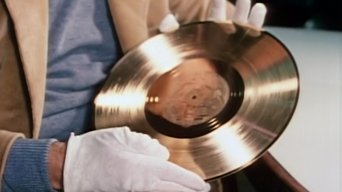
Dr. Sagan compares the exhilaration of 17th-century Dutch explorers who ventured in sailing ships halfway around our planet in their quest for wealth and knowledge to an inside view of the excitement around Voyager's expeditions to Jupiter and Saturn. The newly acquired treasures of our present golden age of exploration are the focus of this episode.

EP7  The Backbone of Night
Nov. 09,1980
The Backbone of Night

Humans once thought the stars were campfires in the sky and the Milky Way "the backbone of night." In this fascinating segment Dr. Sagan takes us back to ancient Greece, when the basic question "what are the stars?" was first asked. He visits the Brooklyn elementary school of his childhood, where this same question is still on students' minds.
EP8  Journeys in Space and Time
Nov. 16,1980
Journeys in Space and Time

A voyage to see how star patterns change over millions of years is followed by a journey to the planets of other stars, and a look at the possibility of time travel. This takes us to Italy, where a young Albert Einstein first wondered what it would be like to ride on a beam of light.

EP9  The Lives of the Stars
Nov. 23,1980
The Lives of the Stars

Using computer animation and amazing astronomical art, Dr. Sagan shows how stars are born, live, die and sometimes collapse to form neutron stars or black holes. We then journey into the future to witness "the last perfect day on Earth," 5 billion years from now, after which the sun will engulf our planet in the fires of its death throes.
EP10  The Edge of Forever
Nov. 30,1980
The Edge of Forever

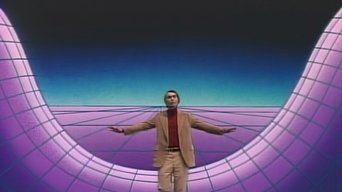
Dr. Sagan leads us on some awesome trips — to a time when galaxies were beginning to form, to India to explore the infinite cycles of Hindu cosmology, and to show how humans of this century discovered the expanding universe and its origin in the big bang. He disappears down a black hole and reappears in New Mexico to show us an array of 17 telescopes probing the farthest reaches of space.
EP11  The Persistence of Memory
Dec. 07,1980
The Persistence of Memory

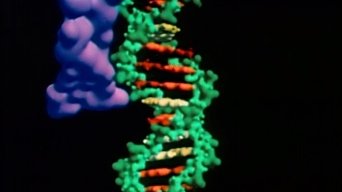
The brain is the focus of this fascinating portion of our journey as Dr. Sagan examines another of the intelligent creatures with whom we share the planet Earth — whales. Then we wind through the maze of the human brain to witness the architecture of thought. We see how genes, brains and books store the information necessary for human survival.
EP12  Encyclopedia Galactica
Dec. 14,1980
Encyclopedia Galactica

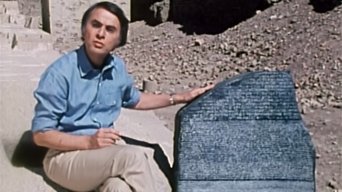
Are there alien intelligences? How could we communicate with them? What about UFOs? The answers to these questions take us to Egypt to decode ancient hieroglyphics, to the largest radio telescope on Earth and, in the Spaceship of the Imagination, to visit other civilizations in space. Dr. Sagan answers questions such as: "What is the life span of a planetary civilization?" and "Will we one day hook up with a network of civilizations in the Milky Way galaxy?"
EP13  Who Speaks for Earth?
Dec. 21,1980
Who Speaks for Earth?

Through the use of special effects we retrace the 15-billion-year journey from the big bang to the present. We also hear the tragic story of the martyrdom of Hypatia, the woman scientist of ancient Alexandria. This is the famous episode on nuclear war in which Dr. Sagan argues that our responsibility for survival is owed not just to ourselves, but also to the cosmos, ancient and vast, from which we spring.

SEE MORE
SEE MORE
9.3 | en | Documentary | More Info
Released: 1980-09-28 | Released Producted By: KCET , Carl Sagan Productions Country: United States of America Budget: 0 Revenue: 0 Official Website:
info

Carl Sagan covers a wide range of scientific subjects, including the origin of life and a perspective of our place in the universe.

Genre

Documentary

Watch Online

Cosmos: A Personal Voyage (1980) is currently not available on any services.

Cast

Carl Sagan

Director

Adrian Malone

Producted By

KCET , Carl Sagan Productions

Cosmos: A Personal Voyage Videos and Images

View All

Cosmos: A Personal Voyage Audience Reviews

Dorathen Better Late Then Never
Borgarkeri A bit overrated, but still an amazing film
Kidskycom It's funny watching the elements come together in this complicated scam. On one hand, the set-up isn't quite as complex as it seems, but there's an easy sense of fun in every exchange.
Claire Dunne One of the worst ways to make a cult movie is to set out to make a cult movie.
Un Zievereir Delightful, entertaining and stimulating show that seems to sprinkle dust from ancient history and "Le Matin des Magiciens" onto the more obvious areas of theoretical physics and the established sciences.His delivery is quite unique with a manner of speaking in slow and oddly placed stretches of vowel sounds. But this only gives the man more appeal for many viewers, including myself. His knowledge appears profound in physics and he has a broad range of interest in other domains. However, some notable blunders are made in the areas of ancient history, biography and philosophy. His appeal has many facets. One could criticise him for reducing complexities or innovative thinking to base concepts and mundane demonstration. But I think this is part of his strength; to encourage, introduce and develop young or unexposed minds to the wonders of the Cosmos. Personally I find the man very affable, bright, and clear (even when considering the wide range of subjects he deals with.) He has a unique place in documentary making. He is both establishment and innovative, regressive and progressive, open minded and close minded. Like most men of character, his contradictions are evident everywhere.A thoroughly enjoyable program by one of the great individuals of the postwar generation.
arnoldhali Cosmos released in 1980 and it is stlll relevant today. I watched this after watching the remake by Neil DeGrasse Tyson, Cosmos: A Space Odyssey. This is the giant, like Isaac Newton on whose shoulder future Science Documentary TV Series can stand. Each and every episode is so enlightening. I watched it in 2018 and I am amazed by the things I learnedThe 21st century generation will be missing out if they skip this one. This was the time of transition and Carl Sagan set it by popularizing science and reaching it to the public. The scientific jargon is minimal and can be understood by the layman. Now i want to read the book.
brian_m_hass The title of this television science mini series says it all. It presents the cosmos as seen from a wide variety of scientific disciplines to give the television audience a perspective on the universe. Sagan shows the relationships between physics, astronomy, chemistry, and biology to demonstrate how everything in the familiar world came into being. The series is about the universe as well as the rise of sentient beings capable of perceiving it. Re-enactments of key discoveries in science present the viewer with a historical perspective on mankind's quest to understand the universe. Carl Sagan's series uses imaginative tools to illustrate the scale of the cosmos. His journeys in the "Ship of the Imagination" demonstrate the true size of the universe. Similarly, Sagan's "Cosmic Calendar" renders the mind boggling length of time since the beginning of the universe into something more understandable by compressing cosmic history into the more familiar time scale of a single year. Both tools point to the fact that human beings and their planet make up a very small and fragile part of the cosmos.Before this series, there had never been anything quite like it on television. Before "Cosmos: a Personal Voyage," there had been many science documentaries on television; and, some of those programs were excellent. However, most of those series focused on only one aspect of science and sometimes did so in a way which seemed coldly detached. This series was unusual in that it stirred the audience's emotions and inspired a sense of awe. The audience experienced Sagan's fears and hopes for future of the human race as he shared his beliefs that humanity could realize its potential by being vigilant to avoid its self-destructive tendencies. The series is more than an ordinary science documentary but is also the presentation of a vision.This television series is a memorable viewing experience. Carl Sagan is articulate and sometimes poetic in his descriptions of the universe. The combination of Sagan's words as well as the music used in the series create an emotional viewing experience. Although some of the special effects of 1980 are somewhat dated, the visuals in the series are nevertheless stunning; and, most of the information presented in the series has managed to remain relevant in spite of the passing of decades since the series' original broadcast.This series is both awe inspiring and humbling. It provides the viewer with a greater perspective on the universe and the viewers place within it. Ever since the broadcast of this mini series, many other science mini series have attempted to follow in its foot steps; but, no other science series on television has managed to capture the imagination in the way "Cosmos" has. Carl Sagan's science mini series is still the standard by which all others are compared and is highly recommended.
Matthew Kresal (Note: This review is based on the 2000 DVD release version of the series)This year (2010) is the thirtieth anniversary of the original PBS airing of Cosmos. A thirteen part documentary series, it won both an Emmy and a Peabody Award at the time of its original broadcast and has subsequently become the most watched PBS program in the world (and held the U.S record for a decade until Ken Burns' The Civil War aired). Not bad for what on the surface would seem to be a long documentary on space. Cosmos though is far more then just that though. Cosmos is an epic journey with few boundaries and many lessons. Thanks to its host Carl Sagan and its three writers (Sagan, Ann Druyan and Steven Soter) Cosmos covers a wide range of topics. These range from the origins of life, its evolution from single cell to modern humans, the ongoing battles between science and superstition, our own evolving outlook on the universe, our fascination with the planet Mars (the subject of the fifth episode "Blues for a Red Planet"), the complexity of the human brain (episode 11 "The Persistence of Memory"), the possible existence of extraterritorial life and our species own survival in the future to name a few of the topics covered in the series. As a result, Cosmos touches on a huge variety of topics that covers much of the human condition and the universe around us at the same time. While some of the science is inevitably out of date after three decades, this is made up for by the afterwords at the end of most episodes and the series has actually predicted a number of things as well (such as the early version of the rovers now exploring Mars seen in the fifth episode). Despite some of the science being out of date, Cosmos is still remarkable for the sheer number of topics in covers on its journey.It makes that journey thanks to fine production values. The series takes Sagan around the world to countries such as India, Egypt, Italy, Japan, France and Mexico along with places across the United States as well such as Sagan's old elementary school where he speaks to children and the Very Large Array of radio telescopes in New Mexico). These foreign locations can also be seen in numerous historical segments that explore the history of astronomy or various events and people throughout history as well such as Johannes Kepler or Jean-François Champollion who became the first person in modern times to translate Egyptian hieroglyphs. To take us beyond the Earth and out into the universe, the series gives us a "Spaceship of the Imagination" based on a a dandelion seed that becomes a reoccurring motif throughout the series. While its interior is exactly what you'd expect out of a 1970s science fiction spaceship, the places it takes the viewer to are not. The effects of the series (at least those not augmented and/or replaced by CGI versions) stand up rather well today such as Sagan walking through a recreation of the library of Alexandria, the beautiful "galaxy rise" seen at the end of episode nine "The Lives Of Stars" or the simple effects used to create the supernova seen in that same episode. Last but not least, perhaps, is the use of music throughout the series from a wide range of sources both classical and more modern including the opening music or the use of Holst's "Mars The Bringer Of War" to help create perhaps the definitive screen version of the famous opening paragraph from H.G. Wells The War Of The Worlds to name but two examples. The result is that Cosmos continues to stand up well even against more modern documentaries and is made even more effective as a result.The series greatest strength may well be in its host, Carl Sagan. Cosmos opening sequence subtitles it "A Personal Voyage" and Sagan, one of the most famous scientists of the late twentieth century, makes Cosmos just that. Sagan's sense of wonder and excitement is evident throughout and it is those attributes that makes the potentially dull parts of this series (dull as in topic you might not personally be interested in) worth seeing. That is in large part because of Sagan's ability to bring abstract concepts (such as the mathematical parts of Episode 10 "The Edge of Forever" or the Drake equation in Episode 12 "Encyclopaedia Galactica") down to a level that almost anyone should be able to understand and find exciting. A great example of that lies in the statement by Sagan at the beginning of episode nine: "If you wish to make an apple pie from scratch, you must first invent the universe." which allows Sagan to take us on a journey from the impossibly small (atoms) to the impossibly large (stars, black holes etc). The series also illustrates Sagan's fears about our species seemingly ingenious ability to find new and more deadly ways of destroying ourselves, especially in the form of nuclear weapons. These fears are best expressed in the final episode of the series "Who Speaks for Earth?" and its haunting dream sequence. Sagan though makes sure that this journey is one that shows us that if we can survive our species destructive tendencies, our greatest accomplishments are still ahead of us. As a result, Cosmos is both an epic journey and a personal one as well thanks to Sagan. It is an epic journey not just across time and space but from the incredibly small to the incredibly large and from our species darkest moments to our greatest accomplishments. It is a personal journey thanks to Sagan, his sense of wonder and excitement about us and our universe. Perhaps its message is summed up best by Sagan himself:"The sky calls to us. If we do not destroy ourselves, we will one day venture to stars."May we indeed.